

Guides, Heritage & Nature
General Tourist Information
All tourist information is available at the two IAT Tourist Offices, located in the square of Vidiciatico and in the square of Lizzano in Belvedere. The staff are always ready to help with maps, trail guides, local itineraries, and tourist brochures, making it easy to explore the Tuscan ‑ Emilian Apennines, nearby villages, and the beautiful natural landscapes that surround the area. Visit the official portal www.cornoallescale.net for details on events, hiking routes, ski areas, and local attractions.
Local Guides
Also active in the area is the Cooperativa Madreselva, a renowned association of environmental and hiking guides. Through their expert leaders, they offer guided walks and excursions of every level — from easy family outings to more demanding mountain hikes. Joining one of their activities is a wonderful way to experience the territory more deeply: discovering its trails, peaks, flora and fauna, and learning about the geography, traditions, and local stories that make the Tuscan‑Emilian Apennines so unique. Their passion and knowledge turn every excursion into an unforgettable encounter with the true spirit of the mountains.
Mountain Bikes and E-Bikes
The Corno alle Scale Bike sports association organizes mountain bike rides throughout the year for enthusiasts, as well as major races, competitions for children and adults, and cycling-related events, often coinciding with local festivals and fairs. All events are available on the association’s website and their social media channels.
Since 2025, an informal group of local hoteliers and shopkeepers has joined forces to organise a shared e-bike rental service, providing a fleet of around ten to twenty electric bicycles for visitors. For information and to arrange a rental, you can simply enquire at the 2G sports shop, located right in the centre of Vidiciatico. The pick-up and drop-off point for the e-bikes is conveniently situated at the tennis courts, just next to the municipal swimming pool.
For the wider territory, however, the main hub for both mountain bike and e-bike rentals — especially if you need to cater for large groups — remains the Porrettana Bike shop and repair centre. Situated in the village of Silla, just before you reach Porretta Terme, it is also the absolute go-to place for puncture repairs, general bicycle maintenance, and spare parts. The shop is part of the larger Porrettana Gomme group.
In May 2026, the Belvedere area will host a stage of the Giro d’Italia for the second time (the first was in 1969), specifically the ninth stage from Cervia (Ravenna) to Corno alle Scale.
History and Culture
Many fascinating accounts of these places can be found in the issues of La Musola, a journal edited by the cultural association of Lizzano, Il Rugletto dei Belvederiani (rugletto is a gathering of people meeting up for a chat), an association founded in 1967 who has collected a remarkable wealth of historical information and curiosities, as well as contributions, memories, and images regarding the Belvedere.
Much of the historical knowledge about Vidiciatico and the wider Belvedere area has been collected by the still active association Capotauro Study Group, whose vice ‑ president, local historian Alessandra Biagi, has written several books and organises guided historical tours.
Photographic Archives
Another excellent resource for delving deeper into local nature and history is the remarkable photographic archive of nature photographer Luigi Riccioni, a native of Lizzano in Belvedere who curated the Emilia-Romagna Region’s Diateca Agricoltura archive for 30 years. On his Facebook page, he posts stunning images of the flora, fauna, and landscapes of Corno alle Scale and the Belvedere area. These are the result of his extensive work of observation and research, sometimes involving arduous waits in hides to reach vantage points inaccessible to most, from which he manages to immortalise these places and its biodiversity.
Credit is also due to Luigi Riccioni for acquiring and showcasing the immense archive (over 500,000 shots) of photographer Domenico Margelli (1924–2019) — also a native of Lizzano in Belvedere — who documented life in the Apennines from 1954 to 2010. A dedicated Facebook page, in addition to several volumes published by Riccioni, displays a selection of the over 100,000 photographs by Margelli that Riccioni has personally developed and digitized.
Vidiciatico
Vidiciatico (known locally as Viciadgō in the local dialect) is a small mountain village set at about 800 metres above sea level, within the municipality of Lizzano in Belvedere, in the province of Bologna, Emilia ‑ Romagna. Resting in the heart of the Tuscan–Emilian Apennines, it lies approximately 70 km south‑east of Bologna, 80 km from Modena, 60 km north of Pistoia, 100 km north‑west of Firenze, 110 km from Ferrara and Ravenna, and 120 km from both the Tyrrhenian and the Adriatic coasts — a crossroads between two of Italy’s most impressive cultural and natural landscapes.
A bit of history
The origins of Vidiciatico date back to the early Middle Ages. The earliest written record appears in a decree by King Astolfo, dated 753, referring to the settlement as Valiciatico — possibly meaning “a place where it is permitted to cut willows”. The hamlet originally consisted of two small settlements, Campiaciòla and Ca’ d’Gherardi, now districts of the present‑day village. Both settlements featured a tiny square surrounded by houses with arched entrances, a central well and a washhouse, both of which are still visible today. In the village square stands the Church of San Pietro, built at the end of the 14th century. The year 1393 can still be seen engraved on a bifora (mullioned window) which, according to local tradition, once corresponded to the apse of a smaller, primitive church. As the population expanded, a new building was constructed between 1882 and 1884. The settlement also features an ancient civic tower, dating back to around the year 1000, which was later transformed into a bell tower during the 16th century. The main economic activities, as in the rest of the Apennines, were historically agriculture and herding, especially sheep. These were joined by the silk industry, so much so that in the 14th century, Vidiciatico had a thriving haberdashery. During World War II, the Vidiciatico area — like much of the Tuscan–Emilian Apennines — witnessed intense fighting between German and Allied forces, as well as the action of the Partigiani. From the 1960s to the 1990s, many families from Bologna, Ferrara, and Florence built or purchased holiday homes here. Today, local initiatives and events — led by the Pro Loco Vidiciatico together with dedicated volunteers and associations — keep the village alive. Their commitment invites visitors to rediscover the pleasure of mountain living and a deeper connection with nature and tradition.
Services in Vidiciatico
Just a short walk from SALVATICO, the village of Vidiciatico offers everything you might need for a comfortable stay in the Tuscan ‑ Emilian Apennines. You will find:
- A Tourist Office (IAT);
- An outdoor municipal Swimming Pool with slides and family area;
- Six Hotels with Restaurants;
- Two Pizzerias;
- An Osteria;
- Two Bars and a Pub;
- Grocery shops, a Butcher’s, a Hardware store, a Sports equipment, a Ski specialized shop, a Tobacconist, a few Artisan stores, two Hairdressers, a small Beauty salon;
- A Pharmacy, a Bank with ATM, a Post office;
- A Car workshop;
- A charming vintage Cinema.
Unmissable Places, Routes and Experiences in Vidiciatico
THE MONTE GRANDE LOOP
A journey through deep woodlands
(Circular route starting from Vidiciatico)
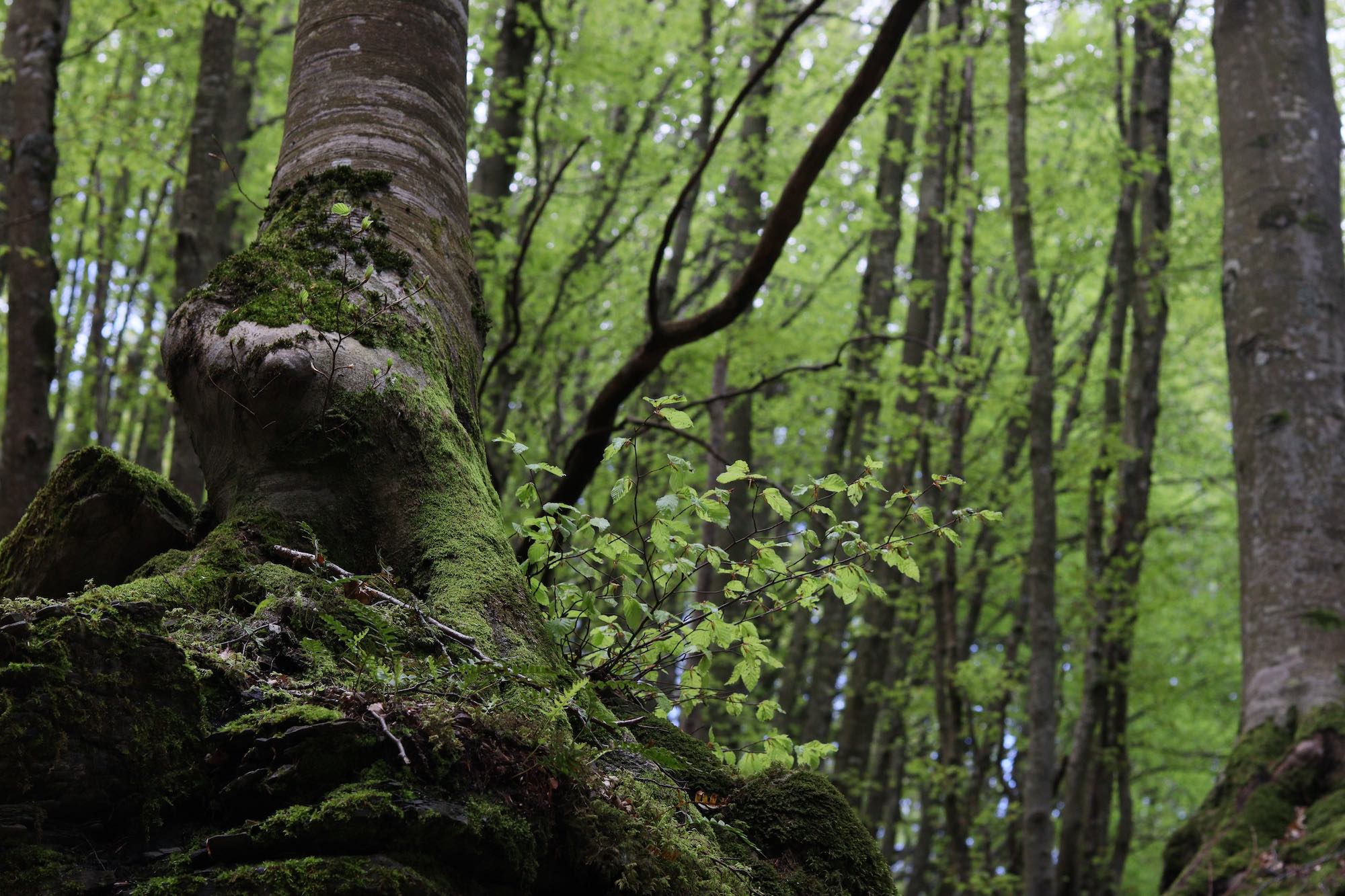
My favourite hike is the Monte Grande loop, a 14 km circular route in the woods (approx. 800 m elevation gain) that begins right at SALVATICO’s front gate. Leave your car keys behind and step straight into the wild. This hike will rewards you with one of the most spectacular views in the entire Apennines. Setting off from the Salvatico gate in Vidiciatico (850 m), head up the tarmac road towards Fontana D’Africo. From here, join CAI path 127, immersing ourselves in splendid, silent woodland. The trail climbs steadily until we reach Bocca Delle Tese (1173 m). Here, the real ascent begins as we take CAI path 125, climbing higher towards the summit. Reach the top of Monte Grande (1531 m) and enjoy the panorama. Unfolding before you is the majestic ridge of the Tuscan – Emilian Apennines: from Monte Gennaio, to the Corno alle Scale and Monte La Nuda, and continuing along the Frignano ridge as far as Monte Cimone. Looking down, the view plunges into the Silla Valley, revealing the architectural jewels of Pianaccio and Monte Acuto delle Alpi nestled below. After taking in the view, begin the descent via CAI path 129. The walk becomes gentler and more tranquil as we pass the Sboccata Dei Bagnadori, winding our way back down through the trees to return where you started.
Start/Finish: SALVATICO Guest House, Vidiciatico
Distance: approx. 14 km (Loop)
Elevation Gain: 800 m
Highest Point: Monte Grande (1531 m)
CAI Trails: 127, 125, 129
Difficulty: E – Moderate
Monte Grande: a haven for Cyclists too
The area spanning Budiara, Monte Pizzo, and Monte Grande is also a haven for mountain biking enthusiasts. The local association, Corno alle Scale Bike, has created here a network of marked itineraries catering to all levels, from relaxing e-bike tours to technical enduro trails. Consequently, these woods are frequently visited by cyclists, who often share the hiking paths to explore the terrain and enjoy the thrill of the descent.
Worth a visit
Oratorio di San Rocco
At short distance from the square of the parish church, stands the tiny and charming Oratory of San Rocco, built in 1631 as a votive offering marking the end of the plague. During the summer it is opened by volunteers, for photographic exhibitions.
Osteria dell’Osto
Another place you should visit is the Osteria dell’Osto, tucked away in the village’s tiny ancient quarter. It’s run by Piero, an extraordinary character — a horseman, a traveller who has roamed the world, and returned home to share his stories. His small stone‑walled osteria, lined with photographs of his adventures, is a true gem. The kitchen serves wonderful lunches and dinners, showcasing local produce and time-honoured Apennine recipes. On some evenings, it comes alive with singing, guitars and wine, creating spontaneous gatherings where locals and visitors share that unmistakable Apennine warmth. As with all other restaurants in Vidiciatico, it’s always best to call them to check if there are seats available and to book lunch or dinner.
Cinema Teatro La Pergola
Since 2019, a group of volunteers — of which I am proud to be part — has reopened the historic Cinema Teatro La Pergola, thanks to the commitment of the village priest Don Giacomo Stagni, who passed away in 2024. Today, with the support of Don Filippo Maestrello, the cinema in Vidiciatico operates year‑round, offering three weekly screenings, occasional theatre performances, and a distinctive underground programme featuring independent films, mountain documentaries, author animation, and workshops for teachers, children, and families. This achievement has been made possible through the work of Cristina Piccinini from the Cineteca di Bologna, who gathered and coordinates a team of volunteers devoted to keeping this cultural space alive. If you also like old-style picture houses, don’t miss the Wednesday 9 pm screening — featuring films in their original language with Italian subtitles — and the Saturday 9 pm and Sunday 6 pm screenings (dubbed in Italian).
Annual Events & Traditions in Vidiciatico
Organised by the Pro Loco and the local community
Winter events
From the first Saturday in December to Epiphany: Il magico borgo di Babbo Natale. The ancient quarter of Vidiciatico comes alive with activities for children and food stalls offering mulled wine (vin brulé), roasted chestnuts, and sweet treats, all awaiting the arrival of Santa Claus. Last week of December: La Festa tra le Feste. Vidiciatico’s main square bustles with an open-air party featuring stalls selling mountain products, mulled wine, and music with DJ sets to celebrate the season. First week of January: La Befana al Cinema e la Donviccia. The magical afternoon of the Epiphany begins at the Cinema La Pergola with an animated film screening, followed by the prize lottery draw and the highly anticipated arrival of La Befana (the good witch), who hands out traditional stockings gifted by the Vidiciatico Pro Loco. The celebration continues with the traditional Donviccia, wandering through the village streets singing and playing guitars, culminating in the ancient quarter for more wine and treats.
Summer events
29th June: Festa del Patrono San Pietro and the Corno Ti Risiko festival. A programme blending religious tradition and entertainment. An evening aperitif in the square with local products, bouncy castles for children, a concert by the local brass band, the religious procession, and finally live music. Simultaneously, a unique festival dedicated to fans of the board game Risk (Risiko) takes place. July and August: Festa del Borgo e Vidiciatico Street Food festival. Three weekends thoughout the summer season dedicated to culinary delights and music, where the village lanes fill with food trucks and stalls offering the best regional specialities—from zampanelle and ciacci to locally brewed craft beers—all accompanied by live music. The week of Ferragosto: Giughence la campana (let’s play for the bell). The most important party of the summer begins with a parade of the territory’s four districts, who challenge each other until late at night in Vidiciatico’s square with goliardic games and tests of mountain endurance.
Lizzano in Belvedere
A bit of history
Lizzano in Belvedere (known as Liżã in the upper mountain Bolognese dialect and Liżàn in the city dialect) is an Italian municipality of around 2,000 inhabitants, part of the Metropolitan City of Bologna in Emilia‑Romagna. The name Lizzano in Belvedere partly derives from the Fortress of Belvedere, which once stood on the summit of Monte Belvedere. The first part of the name appears to originate from the ancient silva litanam, a wood considered sacred by the Celto‑Ligurians, where priests performed religious rites with their ceremonial staff, the lituus — hence the name Lithanus. Evidence of early human presence in the area comes from finds such as flint and terracotta tools from the Stone and Bronze Ages, discovered near Sboccata dei Bagnadori and Rocca Corneta. Among the various peoples who later settled here were the Ligurians, Etruscans, and Gauls. The mummie — characteristic stone heads carved on houses and chimneys as good‑luck symbols — are said to derive from the Gallic custom of displaying the heads of defeated enemies at the entrances of their dwellings. During the Roman period, Lizzano was known as Litanos — a Celtic village and the site of a sanctuary of the Boii — before becoming part of the Roman domain. In 553, Lizzano came under the Exarchate of Ravenna, as evidenced by the remains of the ancient Byzantine ‑ style parish church dedicated to Saint Mamante of Caesarea. In 753, the lands belonging to King Astolfo of the Lombards were donated to the powerful Abbey of Nonantola. The official document of donation records, for the first time, the name Massa Lizano. In 1227, during the era of the city‑states, a fortress was built in a dominant position and called the Fortress of Belvedere — a name which with time came to define the entire area. At that period, the territory was divided into five local communes: Belvedere, Gabba, Lizzano, Monteacuto delle Alpi, and Rocca Cometa. In 1293, the Senate of Bologna promoted the construction of a canal to facilitate the transport of beech logs to the city, partly diverting the waters of the Dardagna Stream into the Reno River. Lizzano in Belvedere has long been a mountain crossroads — in the 1800s along La Viottola, the route linking Bologna to Pistoia, and later connecting Bologna and Modena with the construction of the Statale delle Radici road. The current Church of San Mamante was rebuilt in 1931. Beside it stands the Delùbro, a pre‑Romanesque temple — or rather, a baptistery built in the Lombard era — probably the oldest monument in the province of Bologna (8th century). Art and history scholars have noted the contrast between its rough, primitive exterior, seemingly barbaric and devoid of architectural refinement, and certain interior details that clearly belong to Romanesque art — such as the narrow windows and the small door that once connected a presumed tower to the church. During World War II, the area — like much of the Tuscan–Emilian Apennines — witnessed intense fighting between German and Allied forces, as well as the action of the Partigiani. One of its darkest episodes unfolded in La Ca’, in the nearby hamlet of Ca’ Berna, where, on 27 September 1944, Nazi troops massacred thirty unarmed civilians, mainly women and children. The area was liberated a few weeks later, on 16 October 1944, through the combined efforts of Partisans and Allied forces following fierce battles in the surrounding area. The memory of those years remains deeply felt within the community. Each year, the Municipality of Lizzano in Belvedere commemorates the sacrifices of the Partisans and Allies with public ceremonies attended by locals and visitors alike. Among the figures honoured are Antonio Giuriolo — a teacher from Arzignano, in Veneto, who came to fight on the Gothic Line as commander of the Brigata Matteotti Montagna and was killed in combat here in Lizzano in Belvedere while trying to rescue a wounded comrade — and Enzo Biagi, native of nearby Pianaccio, a Partisan of the Brigata Giustizia e Libertà and later one of Italy’s most respected journalists and writers. To this day, groups of American and Brazilian visitors — descendants of the 10th Mountain Division soldiers — return to the Belvedere sites, the Riva Ridge and the village of Fanano, to walk the same mountain paths once crossed in battle from their ancestors. From the 1950s to the 1980s, many families from Bologna, Ferrara, and Florence built or purchased holiday homes here, even as the local population gradually declined. Later, arrivals from Romania, the Netherlands, and the United States formed small but vibrant communities. In recent years, depopulation and reduced services — challenges common to many inner‑Apennine regions — have affected the area. These issues tend to fade during the tourist season, when life returns to the villages, only to reappear in the quieter months. The property market, whose value has decreased over time, now offers an abundance of historic homes awaiting restoration, appealing to those who dream of a peaceful retreat amid unspoiled nature. Despite such challenges, the area continues to thrive, sustained by its sense of community and authentic hospitality. Today, local initiatives and events — led by the Municipality and the Pro Loco of Lizzano in Belvedere together with dedicated volunteers and associations — keep the village alive.
Services in Lizzano
The main village of Lizzano in Belvedere offers other services and facilities. You will find:
- The Municipality Office;
- A Tourist Office (IAT);
- Six Hotels with Restaurants;
- Two Pizzerias;
- Two Bars – Pubs;
- A Bakery, three Grocery shops, a Clothes shop, a few Artisan stores, a Hairdresser, a Beauty salon;
- A Laundromat;
- A Pharmacy, a Bank with ATM, a Post office;
- An insurance office;
- A car workshop;
- Two Gyms;
- A Sports Center and various Sports Associations.
Unmissable Places, Routes and Experiences in Lizzano
IL SENTIERO DEI SETTE CASONI
A journey into chestnut history
(Circular route starting from Vidiciatico)
Starting from the Vidiciatico cemetery, just a short walk from SALVATICO, take CAI trail 125. This route leads to Lizzano in Belvedere (the municipality’s main town) by traversing the Sentiero dei Sette Casoni, which winds through a magnificent ancient chestnut forest. The casoni (also known locally as metati) are traditional Apennine stone structures used to dry chestnuts. Once dried, the chestnuts were taken to the mill to be ground into flour—historically the staple food and main source of sustenance for the mountain people. Consequently, this route holds profound historical and cultural significance, as chestnut cultivation was the primary livelihood for the local community until just a few decades ago. Along the way, you will find several signposted spots designed for practising Forest Bathing, allowing you to fully immerse yourself in the healing atmosphere of the woods. The final stretch of the path features a Via Crucis before arriving in the village of Lizzano in Belvedere.
Start/Finish: SALVATICO Guest House, Vidiciatico
Distance: approx. 12 km (loop)
Elevation Gain: 350 m
CAI Trails: 125, 125B
Difficulty: E – Moderate
SASSO – POZZO
Ancient Hamlets and Historic Traditions
The evocative hamlet of Sasso, small and remote, is one of the most beautiful and ancient in the Lizzano area, mentioned as far back as the Lombard era (in the Diploma of Aistulf, 753), where it is referred to as Saxum Silicianum, meaning ‘flint stone’. This name is perhaps due to its position on a broad rocky spur jutting northwards towards Monte Belvedere — a spot which, legend has it, was the home of the mythical Queen Silla. Sasso is also the name of the stream that flows eastwards at the foot of the spur, merging into the Rio Freddo before finally emptying into the Silla river. Though almost entirely uninhabited during the winter months today, its stone houses with sandstone slab roofs and carved ashlar stones – lovingly restored by their owners – cluster around the oratory and the small square with an old iron fountain.
The Oratory of Sasso, dedicated to the Annunciation of Mary, is the oldest in the Belvedere area. Built with a pitched roof and featuring a single altar, the earliest definitive records of the building date back to 1567, and it underwent restoration in 1676. Inside the oratory—which owes its current structure to works carried out in 1875—you will find a beautifully carved stone holy water stoup depicting a hand holding the water basin. The original bell tower was a small bell-gable (campanile a vela), which was replaced by the one visible today in the 1950s. The entire portal was reassembled in 1858 following expansion works that gave the oratory its present form. These alterations were carried out by two local craftsmen, Luigi Filippi and Gaetano Fioresi, at the behest of Don Angelo Serantoni, a native of the village. The image depicting the Annunciation is an 1836 painting on copper by an unknown artist. The fact that this current image is relatively recent, whereas the local devotion to the Annunciation is much older, suggests that the original artwork (perhaps dating from the 16th century) has sadly been lost.
In 1855, during a severe cholera epidemic that struck the whole of northern Italy, Don Serantoni instituted a votive festival to be solemnly celebrated every three years. He also established processions as part of the Marian Rogations in May, during which the image of Santa Maria di Sasso was carried to all the hamlets under the jurisdiction of the Lizzano parish. This tradition lives on today during the famous Easter Monday (Pasquetta) festivities. The celebrations feature the traditional “Cocetto” ritual, followed by drinks and local specialities at the mountain food stalls, a cross-country race, and prize-winning games for both adults and children. There used to be a saying about this very festival: “In Sasso, she who has no husband will find one, and she who has one will lose him” — a playful nod to the large crowds of young people it attracted and the resulting romantic encounters.
From 1513 to 1532, the tower of Sasso — a 15th-century building, albeit partially altered today — served as the seat of the County of the Belvedere territory, governed by Giangaleazzo Castelli della Rocca. The tower-house (casa-torre), featuring a blind 14th-century portal, is still visible today and gives the hamlet its name. You can also see the remains of the Podesteria (the Podestà’s residence). This is one of the oldest firmly dated buildings in the municipality, boasting a 13th-century round-arched portal and a window dated 1449, though unfortunately, unsympathetic restorations have since altered its original structure.
Hidden at the rear of a group of houses in the hamlet of Pozzo, you can glimpse an old circular well, protected by stone walls and a canopy made of sandstone slabs covered in a carpet of moss. Indeed, the hamlet of Pozzo (meaning well) owes its name to a small spring that was tapped and transformed into a well to quench the thirst of all the residents in the small settlement. Pozzo has been documented since the early 1500s, appearing in records concerning the Fioresi family, who made this hamlet their ancestral home for centuries.
Corno alle Scale
The Corno alle Scale Regional Park, an area of great biodiversity and natural beauty, offers a dense network of CAI trails, with over 18 marked itineraries of varying difficulty, from family-friendly to expert-level.
During the summer, many trekking and outdoor enthusiasts, mainly from Bologna, Modena, Ferrara, Pistoia and Florence, but also from the UK and northern Europe countries, flock to these ridges to enjoy the nature and beautiful views these mountains have to offer. From Corno alle Scale Regional Park it’s possible to reach the Frignano Regional Park via ridge trails, reaching Lake Scaffaiolo and the Strofinatoio Pass – bordering areas between the Bologna and Modena Apennines – passing by Lake Pratignano and reaching the village of Fanano.
In winter the ski lifts, which are currently being rebuilt, are popular with skiers and snowboarders, and the park is also a destination for ski mountaineers and snowshoers. It was here that the skiing champion Alberto Tomba trained, and today two slopes in the area are named after him. The heavy snowfalls that often occurred in the past created a significant skiing tradition, a school of ski instructors and a network of ski equipment manufacturers, which still exist today. What has changed is the amount of snow that now blankets these areas, which have been affected by climate change, and now local communities must deal with this reality.
The Alta Via Dei Parchi, a 500-kilometer itinerary divided into 27 stages that crosses three regions (Emilia-Romagna, Tuscany, and Marche) and touches 10 provinces (Parma, Reggio Emilia, Modena, Bologna, Ravenna, Forlì-Cesena, Rimini, Lucca, Massa Carrara, and Pesaro-Urbino) passes through here. These are protected areas of high naturalistic value: two National Parks, five Regional Parks and one Interregional Park.
Of the many trails and paths that characterize this area, below you’ll find two that are truly unmissable, especially during the off-season to appreciate the silence and beauty of the land.
Unmissable Places, Routes and Experiences at Corno alle Scale
MADONNA DELL’ACERO AND CASCATE DEL DARDAGNA
Circular hike via the Seven Waterfalls
Along the road to Corno alle Scale, lies one of the most enchanting sites in the Bolognese Apennines: the Sanctuary of Madonna dell’Acero (1190 m). Built in the 16th century among ancient maples, it marks the spot where, according to legend, the Virgin Mary appeared to two shepherd children lost in a snowstorm, saving their lives. The sanctuary remains a place of peace and devotion, surrounded by forest, silence, and the crisp scent of mountain air. Just below, the Hotel Ristorante Acero welcomes visitors with the warmth of an Alpine refuge and the excellence of Emilian ‑ Apennine cuisine: handmade fresh pasta, mushrooms, crescentine, tigelle, curated meats and local cheeses, served with genuine hospitality and views over the woods. From here, a pleasant excursion leads to the Dardagna Waterfalls, one of the most spectacular natural sights in the Corno alle Scale Park. The well‑marked path winds through beech forest beside the stream, revealing a sequence of seven cascading waterfalls, a dazzling vision of water, rock, and moss. Those wishing to extend the trek can continue uphill from the waterfalls towards Laghetto del Cavone, following the trail that runs alongside the Dardagna’s seven falls — a route that offers a truly unforgettable experience immersed in pure mountain nature. A visit to Madonna dell’Acero — with its sanctuary, fine local food, and breathtaking scenery — captures the spiritual and natural essence of the Tuscan ‑ Emilian Apennines.
Starting point: Sanctuary of Madonna dell’Acero (1190 m)
CAI trails: CAI 331 (From the Sanctuary to the first Waterfall), CAI 333 (from the Dardagna Stream to the Seventh Cascade), with optional connection to CAI 337 (from Laghetto del Cavone retrace your steps or complete a loop by following the asphalt road back to the Sanctuary)
Estimated time: 30-45 minutes for the first waterfall, 2 hours for the full loop
Total ascent: 300 – 350 metres
Difficulty: E – Moderate
From Corno alle Scale, many other hiking routes branch out westward towards Modena, passing the beautiful and fragile Lago di Pratignano to the village of Fanano (MO), or south into Tuscany, crossing the Apennine ridge towards Abetone and Cutigliano (PT).
CORNO ALLE SCALE AND LAKE SCAFFAIOLO
Circular hike via the Valley of Silence
This classic loop hike starts at Laghetto del Cavone (1424 m) and follows CAI 337 through a cool beech forest, alongside the quiet Rio Piano torrent. The path crosses the stream by easy fords and soon opens onto the stunning Valley of Silence, filled with birdsong and the sound of flowing water. Leaving the woods behind, the trail reaches wide alpine meadows beneath the rocky walls of Corno alle Scale. The area bursts with wild orchids and mountain flowers, attracting butterflies and bees, while hawks and eagles circle above. The route then climbs to Passo della Porticciola (1666 m) before reaching the Alpe di Rocca Corneta, a gentle plateau dotted with pastures, ski lifts and the summer hut Le Malghe. CAI markers indicate several paths: to the left, CAI Trail 129, the route to Passo del Vallone leading toward Monte La Nuda and the dramatic Balzi dell’Ora — a challenging ascent to the summit for expert hikers which follows the ridge line climbing the rocky steps of Corno alle Scale. This route is classified as EE (for Expert Hikers) and becomes alpine in winter conditions, when crampons and an ice axe are required. It demands sure footing, a good level of fitness, and no fear of heights. Because of its exposure, the trail should not be attempted in bad weather or strong wind, and it is not recommended for dogs. To the right, trail CAI 335 – a gentler option suited to less‑experienced walkers – continue upward among blueberry bushes to the iron cross on Punta Sofia (1939 m), and then along the ridge to the highest point, Corno alle Scale (1945 m), offering one of the most breathtaking views in the Tuscan ‑ Emilian Apennines. The descent follows CAI 129 towards Passo dello Strofinatoio, then CAI 00 along the Apennine ridge — the natural border between Emilia‑Romagna and Tuscany — to Lago Scaffaiolo and the welcoming Rifugio Duca degli Abruzzi, perfect for a hearty meal of local mountain fare. The wide path then descends gently through meadows and woodland, returning to Laghetto del Cavone.
Starting point: Laghetto del Cavone (1424 m)
Total duration: 6 – 7 hours
Total ascent: 630 m
Maximum altitude: 1945 m (at Punta Sofia, the highest summit of Corno alle Scale)
Distance: 8 km
Difficulty: CAI trail 335, E – Moderate; CAI Trail 129, EE (for Expert Hikers)
The Belvedere’s Waterways
A Journey Through Heritage, Nature and Memory
Mills, ironworks and fountains of the Belvedere
Following the thread of Water: an Open-Air Museum of Mountain Life
In the mountains framing Lizzano in Belvedere — the highest and most spectacular in the Bologna area, protected by the Corno alle Scale Regional Park — water has always been the undisputed star. In the distant past, it shaped the primordial forms of the mountain landscape with its immense power, and over the centuries it has been both a threatening presence and a fundamental resource for the life and economy of the villages. In the Lizzano in Belvedere territory, from the glacial cirques and the magnificent waterfalls of the mountain streams to the calm, regulated waters of the millponds — bottacci in local dialect — which provided the motive power for the mills and other workshops, an extraordinary natural and cultural heritage unfolds before your eyes. Through stunningly beautiful scenery, evocative time-worn buildings, and countless smaller structures, it tells the story of man’s tenacious, vital, and industrious relationship with the mountain environment. Since time immemorial, the waters of streams and brooks have been diverted and channelled to tame their force, but also to transport timber from the woods, turn the millstones, serve the daily needs of the inhabitants, water the animals, and, in more recent times, provide power for the blacksmiths’ forges and the first hydroelectric power stations: remote though it may be in the upper Silla valley, the village of Pianaccio had electricity at the end of the nineteenth century, a few years before Bologna itself. A detailed thematic guide — edited by the Villa Ghigi Foundation of Bologna for Corno alle Scale Regional Park and the Emilia-Romagna Region — describes the most important and curious elements of this vast inventory, a scattered open-air museum available to the visitors of our mountains, that — by following the thread of these fresh and precious waters — can connect with the architecture, the atmospheres, and the evocative spots of a journey of discovery.
Trout Farming, Mountain Lakes and Places of the Heart
Closely linked to the fundamental role of water in the Belvedere area is the historical tradition of the Lizzano in Belvedere fish hatchery (stabilimento ittiogénico). For decades, the pristine, icy waters of the Dardagna river and the surrounding valleys have been the lifeblood of a thriving fish-farming industry, particularly renowned for breeding rainbow trout (trota iridéa). Such was the cultural and gastronomic importance of this activity that, in more recent years, the local mountain aquaculture was even recognised as a Slow Food Presidium, celebrating its sustainable, high-quality produce.
Today, this enduring tradition can be fully appreciated at the Laghetto di Farné (also known as the Laghetto del Dardagna). Tucked away in a remote and secluded mountain setting, this charming lake is an absolute must-visit. It serves as a sport fishing haven where visitors can enjoy a truly immersive experience: anglers can choose to independently grill their freshly caught trout right by the water, or simply relax and savour the delicious dishes prepared by the welcoming managers. Beyond its sporting and culinary appeal, the lake offers a feast for the eyes; a visit here rewards you with one of the most spectacular blooms of hydrangeas (ortensie).
Until last year, the Laghetto di Porchia in Lizzano in Belvedere offered a similarly idyllic setting for catching rainbow trout. Sadly, this wonderful facility is currently closed. Beyond sport fishing, Porchia boasted a beautiful restaurant run by the talented chef Daniele Riva, who has since relocated to the village of Fanano. For years, Daniele managed this small lakeside eatery—undeniably one of the most enchanting venues in the entire territory—with remarkable passion and expertise. He hosted exquisite tastings, themed dining experiences, and unforgettable parties. Tragically, all this dedication was not enough to sustain the business. The management of the Laghetto di Porchia is fraught with complexities that make running it prohibitively expensive. The facility is in desperate need of major restoration work, and the upkeep of the water system demands constant, costly maintenance. To complicate matters further, the lake falls under a tangled web of institutional jurisdictions, being overseen by three separate authorities: the Metropolitan City of Bologna, the Municipality of Alto Reno Terme, and the Municipality of Lizzano in Belvedere. Unfortunately, up until now, these institutions have failed to collaborate effectively to support a willing and dedicated young entrepreneur in keeping this venue open. For many locals, Porchia remains a true place of the heart. I hope that new opportunities will soon present themselves, allowing Daniele to return and breathe life back into this deeply cherished place.
Pianaccio, Segavecchia, Monteacuto delle Alpi
Pianaccio and Segavecchia
This text is an excerpt from a more comprehensive piece available on the Pianaccio Pro Loco website, curated by local historian Alessandra Biagi.
You do not reach Pianaccio by accident. Indeed, it requires a certain determination to navigate the few winding kilometres that separate it from the valley floor. However, as with all things hard-won, the spectacle that awaits upon arrival is truly unique. Thousands of trees—chestnuts, hornbeams, downy oaks, and, higher up, maples, beeches, and who knows what other species—form a seemingly impenetrable forest from which the first houses of the village suddenly emerge. How they managed to build them up here, in the few available metres between one sheer drop and another, remains a profound mystery. It is a balancing act between man and nature, inextricably linked here: the former forged the latter, and was in turn altered by it.
The history of all Pianaccio’s inhabitants has always had to reckon with the forest. This relationship was both positive, as they relied on it for the chestnuts essential for their survival and for the little work available locally, and negative, because such a harsh and hostile environment forever shaped their lives and character. They were a tough, somewhat rebellious people, forced to move to the plains for several months a year in search of work just to make ends meet. As a reaction, this forced separation bred within them a fierce sense of belonging, rarely found in other areas. In 1851 a description of the parish churches of the Bologna Diocese it is said about the inhabitants: “…the love of their native place has taken such deep root in their breasts that these crags, these woods, and these cascading waters are dearer to them than splendid cities.” The first question one asks upon arriving up here is why the earliest inhabitants chose such a difficult place to live, where “Nature seems to have gathered in the Sela gorge the most grandiose, wildest, and most terrible things she can create”. Unfortunately, there are no rational answers, other than the fact that these very places, so inaccessible today, once provided a refuge for those who somehow needed to protect or hide themselves. For this reason, like almost all high-mountain settlements, Pianaccio does not boast a noble history; there was neither the time nor the money to build towers or cathedrals. Rather, its past is simple and easy to read, yet no less fascinating for it.
The settlement of Pianaccio has been documented since at least the 15th century as a hamlet of the Monteacuto delle Alpi municipality and its parish. The earliest known records date back to this period, although the inhabitants deeply resented this arrangement—particularly their subordination to the church of San Niccolò in Monteacuto delle Alpi, where they were obliged to go on Sundays to attend services. While this might raise a smile today, at the time it represented a mark of submission that the proud people of Pianaccio found hard to stomach. It was only on 14 September 1831 that the village gained independence from the mother parish by archiepiscopal decree, thanks to the initiative of the Monteacuto parish priest, Don Floriano Biagi.
The name of the village, referred to in ancient documents as Planatium and later Pianazzo, indicates a hillside settlement on a small, poorly exposed plateau — hence the pejorative suffix. The people of Pianaccio, like those of Monteacuto, were known for their mercantile enterprise, which led to frequent trade with nearby Tuscany. Furthermore, during times of famine, like many inhabitants of the Belvedere area, they were forced to seek work elsewhere, primarily making charcoal in Maremma, Corsica, or Sardinia; alternatively, they were transhumant shepherds, spending the winter with their flocks on the plains of Bologna or Romagna.
This village is the birthplace of several illustrious figures: Guglielmo Fornaciari, an Air Marshal and First World War hero decorated with various medals for valour; Enzo Biagi, a renowned post-war journalist, to whom a museum in his birth house is dedicated; and Don Giovanni Fornasini, the parish priest of Sperticano (Marzabotto), who was murdered by the Nazis in October 1944 at just 29 years of age and posthumously awarded the Gold Medal for Military Valour. The small village square in front of the church, which is dedicated to Saints Anne and James the Great, is named in his honour.
Pianaccio—with its walls, stones, sandstone-slab roofs, and narrow alleys—boasts a perfect harmony among its elements, lending the village a sense of authenticity and naturalness that blends seamlessly with the surrounding environment. It is a natural architecture dominated by stone, still visible in its original state as you stroll through the Pianaccio Vecchio district or venture as far as the Fiammineda hamlet, where the date 1644 and a Maltese cross are carved into a window lintel. The old part of the village sits on a sort of natural terrace, with buildings clustered closely together to form a single agglomeration straddling the Silla valley. Here, you will find the village’s oldest buildings, dating back to 1513, featuring typically mountainous architectural traits: small windows, low portals, and lintels adorned with the mountain rose motif.
Alongside the Biagis, who originate from Pianaccio Vecchia, the Fornaciari family is also one of the most prominent in the village. They hail from the Sambuciòne district, where the buildings clearly adapt to the steep slope, built upwards rather than outwards. This district is home to a beautiful mill, the Mulino di Pietro. Dating back to 1880, it is still in perfect working order and has been recently restored, albeit for educational purposes rather than to resume commercial milling. Fed by the waters of the Fosso Bagnadori, this mill was the focal point for many locals bringing their dried chestnuts to be ground. Being right in the village, it was highly convenient, even if smaller than the Squaglia mill (which mainly served the people of Monteacuto) or the Taccàia mill (in the Panigale area), situated further downstream along the Silla river.
A hamlet of Pianaccio is Fiamminèda, dating from the 17th century and long uninhabited. Mentioned in the 1630 land registry as “a large house where many families lived”, it is reached via a lovely paved path. Today, this hamlet consists only of ruined houses protruding from the ground like skeletons. Just after leaving the village of Pianaccia towards Fiamminèda, there is a beautiful 1920s roadside shrine (maestà) on the left, and slightly further on, also on the left, a well once used for washing clothes.
Heading upwards to the edge of the village—where a well known as La Fontanina was once used for laundry—stands the Antica Locanda Alpina. It is still successfully run by the Gentilini family today and ranks among the finest restaurants in the entire Belvedere area, offering mountain specialities and traditional recipes.
Heading back down halfway through the village and following the signpost along the tarmac road, you reach the Segavecchia area. The name suggests the presence of an old sawmill (sega meaning saw, vecchia meaning old) for timber processing. But while a sawmill up here is easy to imagine, the adjective “old” seems somewhat unjustified. There is, however, another theory: linking the name to an ancient Mid-Lent ritual. In many parts of the Apennines—and likely in Pianaccio too—it was customary to break the penitential fast for one day by burning, or sometimes “sawing”, an effigy of a decrepit old woman representing Lent. This pagan-rooted interlude of merrymaking was fiercely opposed by the Church. Hence the hypothesis for the name Segavecchia: a secluded spot away from the village, safe from prying eyes, where the locals would gather in utter secrecy to revive the ancient Lenten rite of “sawing the old woman”. Here lies the Rifugio della Segavecchia (Segavecchia Mountain Refuge), another unmissable stop for those wishing to uncover local history, offering a convivial retreat in the cool shade of the woods. Managed by young members of the Cooperativa Madreselva, it opens seasonally and, especially in summer, hosts wonderful evenings featuring themed dinners, acoustic concerts, children’s workshops, poetry readings, and much more. Aside from its historical fame as the base of the Giustizia e Libertà partisan brigade—of which Enzo Biagi was a member—the area is vital for the chestnut-growing tradition. The forest and its fruits were common property, and for centuries, chestnut cultivation represented the inhabitants’ only means of feeding themselves. Once the harvest was complete, the chestnuts were carried to the casòne (the drying house), a modest building with just two openings: a small one at the top to load the chestnuts, and one on the ground floor to light the fire. A slow, continuous fire was kept burning without flames for forty days, ensuring only heat reached the drying racks above. Periodically, the chestnuts had to be turned; they were first piled into the four corners, then carefully spread out again following the exact reverse order. After this long waiting period, during which the chestnuts were guarded almost constantly, the peeling phase began. They were first placed in a b’gòngio (a wooden tub) and beaten with a heavy wooden stànga (pole), and finally freed of the last impurities using a vassòra (a winnowing tray), rhythmically tossing them into the air. The final step was the mill, which transformed the toil of over two months’ work into flour. Today, two casoni are still operational in Pianaccio, one of which is located along the Segavecchia road. They are well worth a visit in autumn, when they are lit up and you can see the casonanti (the drying-house workers) hard at work.
Rifugio Segavecchia serves as the starting point for numerous trails and is one of the ideal gathering place for the expert hiking and environmental guides of the Cooperativa Madreselva. From here, a variety of routes set off into the mountains, catering to different levels of experience. The principal hikes include:
-
Monteacuto delle Alpi Circular Walk (Trail 113): A medium-difficulty circular route that crosses the Rio Causso stream as it heads towards the quaint village, offering a wonderful immersion into the surrounding woodlands.
-
The ‘Direttissima’ to Corno alle Scale (Trail 117): A physically demanding route that climbs steeply from the refuge right up to the summit of Corno alle Scale (1,945 m). It is the perfect choice for experienced hikers in search of spectacular panoramic views.
-
Corno alle Scale Circular Route (Challenging): A long, demanding loop that requires a solid level of fitness. Featuring an elevation gain of over 1,000 metres, it rewards walkers by taking them to the very highest point in the regional park.
-
Ridge Trek (Passo del Cancellino – Monte Gennaio): A beautiful circular itinerary connecting the refuge to the Cancellino Pass, Mount Gennaio, and occasionally the Donnamorta Refuge. This trek treats hikers to wide-open ridges and breathtaking high-altitude landscapes.
-
Monte La Nuda: A highly rewarding hike setting off from the refuge to reach the sweeping alpine pastures and the summit of Mount La Nuda.
Monteacuto delle Alpi
This text is an excerpt from a more comprehensive piece available on the Pianaccio Pro Loco website, curated by local historian Alessandra Biagi.
The most beautiful village in the Belvedere area is this captivating medieval hamlet, perched high on a ridge, commanding one of the most scenic views in the entire region.
Here, sheltered by its mighty walls, spice and cloth merchants would halt on their way to Tuscany; there were bustling inns filled with life and beautiful women, and the wealth of its inhabitants was second only to that of the great cities. Perched on a peak, as unapproachable as a bird of prey’s nest, the castle of Monte Acuto represented the heart of trade between the Bologna and Pistoia territories for much of the Middle Ages. Eventually, at the end of the 14th century, the inhabitants of Monte Acuto fell into conflict with those of Belvedere — the area’s other autonomous municipality — and it was precisely these internal struggles, coupled with the development of new, more convenient trade routes, that sealed its decline. Stripped of its commercial importance and easy prosperity, the village’s isolated position forced its inhabitants to survive by exploiting the only resource they had in abundance: the forest. They became skilled woodcutters and highly expert charcoal burners (carbonai), sought after far and wide. Theirs was a gruelling trade that forced them to migrate to Tuscany, Corsica, or France for several months of the year. They would set off in autumn, immediately after the chestnut harvest (castgnadura), in teams of about ten. They carried their necessary tools alongside the meagre provisions they could afford: a sack of maize flour, some cheese, and a little salt. Upon arrival, their first task was to erect a makeshift hut, roof it as best they could, and prepare the rappazole — beds made of branches and twigs. In the mornings, after a slice of roasted polenta, they would set to work with their axes, toiling until hunger pangs prompted them to send the meo — the youngest, least experienced, and therefore least productive boy in the team — to prepare a meal. Then it was back into the woods to chop relentlessly, day after day, for entire weeks until the felling was complete. Once the cutting was done, they began building the charcoal kilns (carbonaie). First, a pole was driven into the ground, and wooden logs were stacked around it, taking care to leave the ‘chimney’—the centre of the pile—free. This was topped off with a few layers of thinner branches and a layer of earth. Finally, the kiln was ready to be lit. Embers were dropped down from the top chimney, which was promptly covered with more wood until the opening was hermetically sealed. But the work was far from over; in fact, the most difficult phase was just beginning, and this was entrusted to the elders of the team: monitoring the kiln. Using their bare hands and a pole, they would feel where the fire was burning hottest and where it was cooler, adjusting the burn by opening and closing small vents (arfummi). Woe betide them if the fire ‘escaped’, for all the wood would be reduced to ash—and with it, their hard-earned wages. This meant several days of unbroken vigil until the kiln, as if swallowed by the earth, began to sink, signalling that the charcoal was ready.
Like Pianaccio, Monteacuto delle Alpi is made up of different districts (rioni). “La Torre” is the centre of the village, where a small 13th-century fort once stood to defend the borders of the Belvedere, alongside those of Rocca Corneta and Monte Belvedere. In the magnificent central square stands one of the most beautiful churches in the Belvedere area, dedicated to San Nicolò (St Nicholas). There are no certain records regarding the church’s foundation, though the earliest known mention of Monteacuto dates back to the year 950, when it was cited as a ‘chapel’ in a bull by Pope Paschal II. The church’s present appearance is the result of 18th-century remodelling — notably the three-arched portico at the front — although it may well occupy the original site of the chapel belonging to the fortress erected here by the Bolognese Senate in 1227. The church retains its original sandstone flagstone floor and a large stoup on a pedestal dating from 1713. It remained an independent parish until the end of the 14th century, when it was annexed to Lizzano in Belvedere, only regaining the ‘cure of souls’ in 1586 — though the post often lay vacant due to the village’s remoteness and isolation. The Lastre district is the first part of the historic village you encounter. Its name derives from a large sandstone outcrop upon which several buildings were erected, following the unevenness and steep slope of the rock.
In Monteacuto, stone dominates both the landscape and the architecture: all the ancient buildings are made of local sandstone, featuring lintels and portals adorned with ornamental motifs of Comacine origin. From here, you can enjoy breathtaking views over Le Tese, Monte Grande, Monte La Nuda, and Corno alle Scale.
Before reaching the main square, still clinging to the rock, you simply must stop at Il Bagìgio restaurant. Run by Larry, this establishment is another cornerstone of Belvedere hospitality. It offers perfect refreshment after a long walk, serving exquisite homemade pasta dishes, superb meats, and excellent wine, all set within a truly unique atmosphere that perfectly captures the essence of Monteacuto delle Alpi.
Monteacuto delle Alpi is also home to SOLEA – La biblioteca sul crinale, an extraordinary “Ridge Library” active since 2022. Taking the logic of book-crossing, it has grown into a thriving hub of community spirit based on a love for books and the mountains. It is managed by a heroic, energetic group of young women — friends who also frequent our local Cinema La Pergola. Through their sheer passion, they animate this little village, making it, if possible, even more beautiful than before.
Numerous trails set off from Monteacuto, making it an ideal base for exploring the Corno alle Scale Park. Unmissable is the CAI Trail 109 leading to the Sanctuary of Madonna del Faggio — a classic 14 km circular route through the beech groves that passes Mulino della Squaglia. For those heading back towards Segavecchia and Pianaccio, Trail 113 weaves its way through ancient chestnut and beech woods. For a more strenuous endeavour, the Monteacuto – Portafranca – Acqua Caduta circular route (taking approximately 8.5 hours) offers a challenging but deeply rewarding hike.